Summer touring season is in full swing and Wednesday night I caught two great bands, Oh Pep! and DonCat live on the Rickshaw stage. Through my headphones I’ve been blasting two new bands of 2016 that I can’t recommend enough – Whitney and Jamila Woods. For those looking for a nostalgic summer soundtrack there is always Day of the Dead: a new 59-song Grateful Dead tribute album featuring The National, Lucius, Courtney Barnett, Wilco, The Flaming Lips, and many others. So much good summer music to be had, buckle up and start singing folks!
On Stage
Oh Pep!
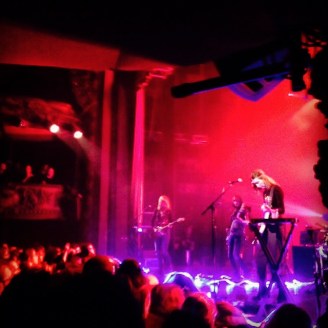
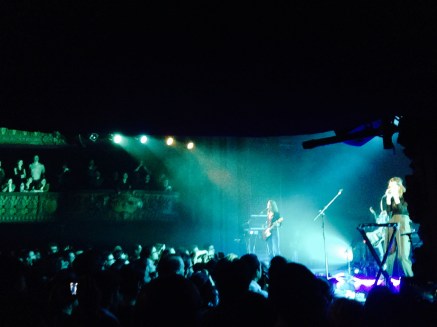
Wednesday night I was back at one of my favorite little venues, the Rickshaw stop, for a night of new music. Headlining the show were Aussie indie darlings – Oh Pep! Originally from Melbourne this duo of Olivia Hally and Pepita Emmerichs stood on stage in sparkly dressesand charmed the audience with their accents and perfectly executed pop-folk sound. They professed their love for San Francisco and their blatant distate for coffee (despite a misleading lyric, but “hot chocolate just doesn’t sound as cool”). Lying lyrics aside, Oh Pep!’s mandolin solos and beautiful harmonies won over the local crowd pretty quick. They just released a debut album Stadium Cake, with the catchy single “Doctor, Doctor” below.
Opening for Oh Pep! last night was a completely different band – DonCat. This local San Francisco band brought shoe-gaze ballads and surfer rock melodies to the stage. Some songs, like “Give it Away” (below) could be described as California cowboy folk, but other songs had heavy metal infused rock – with such a wide musical range this band could go a lot of directions, it will be fun to see what’s next. Kudos to lead singer and songwriter Duncan Nielsen who injected a lot of heartful mystery into the set with a swoop of black hair and many a soulful stare.
In Stereo
Whitney
The debut album “Light Upon the Lake” by Whitney is by far my favorite album of the summer. I discovered this group out of Chicago thanks to my fellow music nerds at NPR Music ( one time Bob Boilen gave me a fist pump in response to my comment about a Beirut album, so yeah, we’re pretty much besties now. Stop getting so jealous). They are playing at Outside Lands on Friday – so check them out if you’re going! This album is both joyful and bittersweet – the perfect lazy summer soundtrack . Just try to watch the video for their title track “No Woman” and NOT bliss out in this indie daydream…
Also a debut from a Chicago-native, Jamila Woods’ record Heavn is an R&B powerhouse album that that combines beautiful Black Lives Matter protest rhetoric with intoxicating beats. I just can’t stop dancing and singing this album. HEAVN features songs with many of Woods’ friends Chance the Rapper, Noname, Saba, Lorine Chia and Donnie Trumpet. The album is truthful and honest in a way that I haven’t heard put to music in a long time. The message she tells is an important one of equality and justice that is incredibly relevant with today’s violence. For the album’s single “Blak Girl Solider” Pitchfork notes“…Woods champions freedom fighters, feminists, and writers as being “déjà vu of Tubman,” noting that even a young black girl “scares the government…The theme is one of defense in the face of oppression, not vengeance… It’s a “Black Lives Matter (Too)” treatise, not an “(Only) Black Lives Matter” one.” Definitely make some time to listen to Woods’ new album Heavn, you won’t regret it.
Aaron and Bryce Dessner of The National have curated an epic tribute to the music and the artistry of the Grateful Dead in their new album Day of the Dead. Featuring 59 songs and over 5 hours of music this album is a jam-band soliloquy created by a diverse group of modern musicians who pay hommage to the Dead’s musical influence. Don’t listen to this album expecting pithy covers of the Dead’s work- but rather provocative reinterpretations by artists ranging from Lucius to Courtney Barnett, The Flaming Lips to Lucinda Williams, Mumford and Sons to Wilco. The whole album is up on Spotify so explore a bit to see how your favorite artists reconfigure these classic Dead anthems. Courtney Barnett’s cover of New Speedway Boogie is an early favorite of mine:
Thanks for reading, hope you enjoy all this new summer music!
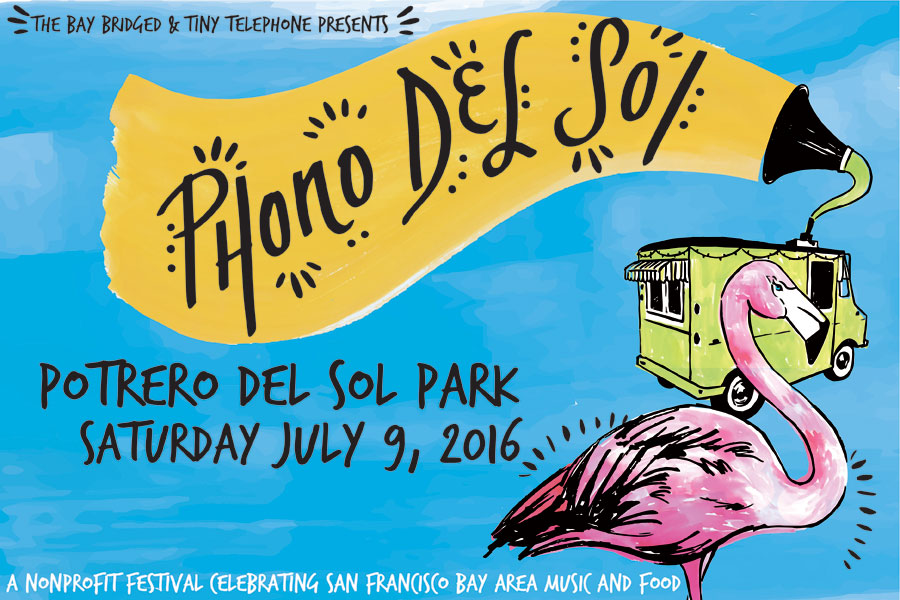
In a sunny corner between the Mission and Potrero neighborhoods lies Potrero del Sol park, a patch of greenery that most San Francisco residents rarely notice. During the city’s foggy months this little park is a summery respite; a community oasis that is poised to host local musicians and delicious food. This weekend is such a celebration, my favorite little music festival – Phono Del Sol .
This non-profit music festival is hosted by The Bay Bridged, a group of local music nerds that have hosted this refreshingly small festival since 2011. It is neither too crowded nor overpriced, which is a true gem these days. Phono Del Sol is the perfect mid-summer celebration for those looking for new music the old fashioned way (aka not just via Spotify’s algorithms). So join us this Saturday as we boogie to local indie grooves, celebrate some birthdays, and sip a beer in the park. Cheers!
Preview the full Phono Del Sol lineup via this Spotify playlist & music videos below:
“Ch-Ching” by Chairlift. This avant-pop duo hails from Brooklyn and helped Beyonce with her 2013 self-titled album (what?!). With catchy beats and haunting vocals they’ll be a great headliner for the Phono Del Sol crowd.
“Archie, Marry Me” by Alvays. Toronto-based Alvays brings a sugary retro-pop sweetness to their classic rock sound. I first heard about this band on the NPR show “All Songs Considered”, so it can be assumed that liberal public radio fans will be equally in love with their work.
“Needle” by Born Ruffians. This Canadian based-band brings playful guitar riffs and shifty hooks to their unique brand of indie music. The sound is infectious and will surely be a crowd-pleaser this weekend.
“Runaway” by Mr. Little Jeans. Having seen Mr. Little Jeans perform a great set at Rickshaw Stop last year, I’m definitely amped to see front woman Monica Birkenes rock the stage again with her melodic, strong vocals.
“Tomorrow Land” by Adam Vida
“Oblivion” by The Sheshen
“Dream Girl ” by The She’s
“Gutter Girl” by Hot Flash Heat Wave. Think of them like a younger, grittier Weezer that films their music video in Golden Gate Park montages with sepia-toned filters.
Whether you want to celebrate the Chinese New Year, Valentine’s Day, or whatever president you like best February is a great month for catch-up celebrations. This little music blog even turns 1-year-old this week, so huzzah!
All be told new music hasn’t been a part of my life for months…winter was filled with graduate school applications (read: Tycho on repeat), plus some fun trips to distant beaches and mountains. So I’m grateful to have reemerged from that sorry pit of instrumental-infused sadness.
To celebrate this new year I’m kicking off 2016 with a special gift for y’all – not one, not two, but THREE playlists. I hope you enjoy the new 2016 tunes and 2015 favorites found below. Sending lots of New Years love!
To celebrate this day of magical mystery, and to balk at all the fear mongers out there, I’m delivering to you a celebratory new playlist. As a reverent lover of Friday the 13th (along with my Golden birthday homegirl T-Swift) I can assure you that only the best things will happen today. So enjoy a detailed breakdown of Fall music highlights below, with a longer catalogue of songs on the Spotify playlist as well. Happy Listening!
After four years of waiting Beirut has showered us with a whole new album of trombone-infused, toe-taping indie hits. I couldn’t be more excited about this predicted debut! Catch their Fall tour if you get the chance, well worth it .
The sexy intro of this tune can make any walk down Valencia street feel like your own personal catwalk. The devilish lyrics from Brooklyn band, Bob Moses, only add to ambiance of their intoxicating beat and snappy tempo. Whether I’m looking for a quick energy boost after work or lofi sound late in the evening I’ve got this record on repeat.
Hand-clap anthem of the Fall, well worthy of it’s contagious success. Last month I caught I caught Shakey Graves at the Fillmore and it was g great set by this Austin native. Lead singer, has all the rockstar swagger in person that you’d expect from his recorded sound.
The brilliance of captivating electronic melodies are the slow build arcs that can tease and tantalize the listener for much longer than the average songwriter. When done well these songs seem to envelope the listener with a drawn out, yet completely satisfying musical journey. Caje is a prime example of this style, and because of it’s slowly unfolding sound it has become one of my favorite workout songs; incredibly satisfying to devour over and over and over again. Hang until minute 3:23 if you can because the simple flamenco beat intersects with mystical Spanish lyrics in a totally mind-blowingly awesome way…
The sweet vocals of lead singer Alaina Moore and 50’s era doo-wop beat were my solace during many weeks of post-Burning Man depression. Seeing Tennis perform live at the Fillmore last month made this solace so much sweeter.
I’m a sucker for a good tambourine and whistle solo, and in this arena Sample Answer hits the nail on the head. Nothing like a solid band out of Dublin to reshape the sound of indie folk, cheers to that!
When I saw Nathanial Rateliff perform at the Chapel this Fall I was struck not only by the Missouri-native’s powerful vocals but also his charismatic stage presence; one that has won him fans with big record labels and late night talk show hosts alike this year. Rooted in the standard folk rock traditional Nathanial Rateliff’s sound is both familiar and innovative, standing on par with the likes of Bruce Springsteen, Otis Redding, and Van Morrison. His song “S.O.B.” will prove to be a breakout single from a highly talented artist with many more hits to come.
Bay Area native Matt Simmons caught on to musical fame as a mini-celebrity in the Netherlands before we had even heard of him. Since his initial European success in 2012 his music has gained recognition state-side and we couldn’t be more excited to celebrate his folk-tinged electronic sound.
With a powerfully distinct voice Arum Rae soothes us into a sultry catatonic haze. The song “Warranted Queen” is her album’s title track and the strumming, anthemic groove wouldn’t be out of place amongst the best of John Mellencamp’s ‘80s singles. Yes please…
This song is my guilty pleasure of the mix – a dance remix of song created for a Disney movie (???), but I can’t say I don’t LOVE this song. The driving bass beat and eurphoic lyrics were a major aid in packing up and moving houses this summer. Sometimes you just need Janelle Monae to sing you through the tough times damn it.
Last week I found myself in a new land: a place where “jorts” and bushy mustaches abound, breakfast tacos are eaten three times a day, and live music is heard even in airport cafes.
This place is beautiful Austin, Texas: the well-known epicenter of music and counterculture in the Southern US. I was in town for work-related reasons (SXSW Eco), but visiting this southwestern soundscape had been on my bucket list for years. And I was not going to let work thwart my desire to boogie down in a legendary music town.
As luck would have it, my trip coincided with Austin City Limits, and thus stellar mid-week shows were in abundance. On Monday night I swooned for the crooning indie folk voice of lead singer Ben Schneider, of Lord Huron. On Thursday night I was beat-blasted by the duo of Sylvan Esso. Both of these bands I had seen before, but earlier in their careers and in less intimate venues. It was an amazing treat to see them perform polished sets to wrap up respective summer tours fora crowd of less than 200 people.
In Austin I was dazzled and delighted by the music and the people who joined me in those audiences. From street corners to front row stages this city wears it’s heart on it’s sleeve when it comes to live music adoration. It creates a creative camaraderie for the residents that electrifies your interactions with strangers. Because everyone is some degree of “music nerd.” I left town feeling exhausted but contented, grateful to have made my first pilgrimage to this indie rock music promise land.
Lord Huron, Emo’s, October 5th, 2015
The night was hot and sticky and in addition to sweat, I was steeped in San Francisco paranoia: my jacket lay limp on my purse strap. My first night, and already I was dragging myself to an ACL Late Night show, because jet lag…or something.
I was grateful to be greeted by two friendly faces when I exited the cab outside Emo’s Club, a large warehouse venue far from from the raucous downtown scene of Austin’s main drag of nightlife. My two friends from San Francisco had spontaneously decided to join me on this impromptu show booking and so we walked to the bar while discussing foreign concepts like: “90 degree evenings” and “$3 beers.”
We sipped local IPAs and PBR tallboys and observed local hipster fashion (legit mustache games) and watched the venue fill in preparation for the main act, Lord Huron, to begin. The popular indie folk band went onstage soon after in a glow of blue fog and mysterious ambiance to match. Within minutes band founder and lead singer Ben Schneider had us swooning for him with his raspy yet melodic vocals. Lord Huron started the set with the upbeat single “Fool for Love” off their newest album, “Strange Tails” which was released this Spring to much fanfare. “Fool for Love” illustrates the album’s apocalyptic theme by detailing a tragic love lost, as narrated by Buck Vernon, a character Schneider once described as “..a washed-up rockabilly country singer.”
The new album has dark undertones, but that level of depth added to the charm of the band’s onstage presence. Schneider himself seemed at home playing the role of “tormented artist,” swaying along with his own particular style of guitar-infused therapy. Throughout soothing folk ballads and hand-clap pop songs, the band created a steady tempo and flow to the set.
As a native midwestern, Schneider formed Lord Huron as a solo project in 2010 and began to add bandmates as the group toured. As the instrumental complexity increased his songs began to resonate more with indie audiences. By the show at Emo’s it was evident the band had been playing together all summer and hit a solid stride of supportive musicality. Even their physical movements were synced: during their encore song “End of Time” when all four bandmands swooshed their surfer locks in unison,a definite homage to their chillwave music style and their unmistakable Los Angeles home. It was a great set to ease into Austin with, a familiar yet totally unique and expansive cinematic sound.
Sylvan Esso, Emo’s, October 8th, 2015
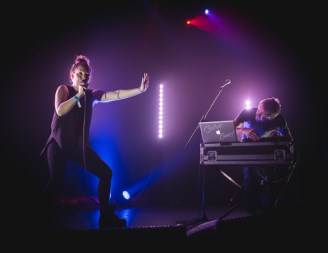
Lead singer Amelia Meath strode on to the
dark stage clad in an army green jumpsuit, long hair up in a side pony tail,perfectly poised for the hair-whipping set that Sylvan Esso delivered over the next two hours. As the stage lights came producer Nick Sanborn led off with a beat-wrenching melody that was matched by a howl from Meath. As the lights on stage rose up the audience gladly returned her call with a scream fitting for the youthful exuberance of the crowd. We were hungry and Sylvan Esso was ready to satiate us with a buffet of deep bass, vivacious vocals, and sassy struts across stage.
The set was a highly energetic, sweaty mess of flashing lights and neighbors bouncing against one another, smiles all around. The crowd sang along to Sylvan Esso’s hits like “Dress” and “Coffee” at full pitch. Within just a few songs, it became evident that the emotional appeal of this show was not just coming from the audience but rather a their relationship between performer and audience. The band paused in-between sets to recount their last show in Austin, the beginning of what would prove to be a prodigious Spring/Summer tour. They noted that “selling out Emo’s as our final stop on the tour feels perfect… like coming full circle.”, My trembling concert buddy (a 6’5’’ black man from “HOT”-lanta) shouted “I LOVE YOU!” so passionately, I checked the bill to make sure Rihanna hadn’t taken the stage.We were in deep, and the party had just begun…
But I was exhausted. After a week of conferences, watering holes, and BBQ, I was spent. But I couldn’t will myself to leave until they played my favorite Sylvan Esso song, “H.S.K.T” (aka “Head, Shoulders, Knees, & Toes”). A little number that crystallized as my favorite song when I saw them perform earlier this Spring at The Fillmore in San Francisco. The genius of this song is that it is a catchy dance beat that belies a personal message – as the lead singer Amelia Meath recounts her universal struggle to accept her appearance; in the face of a female-shaming media that sets archaic societal norms for feminine beauty and leaves everyone feeling unattractive in the process. She sings “I’ve got a television and it’s filling me with hope…I’ve got a phone , and when it beeps I remember… I’m not alone”. The rhythm denotes the intoxicating lure of social media and the havoc it wreaks on self-esteem. Beautiful and horrifying all at once.
Sylvan Esso seemed to have graduated to a new phase of band since I last saw them four months earlier. They were filled with confidence and volume and guts… Coming into their own. They ended the set with a few promising new songs including “Jaimie’s Song” (available on Spotify) and “Say It to the Radio,” a hip swaying beat that will surely to be a hit single on their next album due in 2016.
All and all it was a great musical week in Austin. If I hadn’t left so exhausted, I would have been doing it wrong… and as such I can’t wait until my next musical adventure in the Lone Star state.
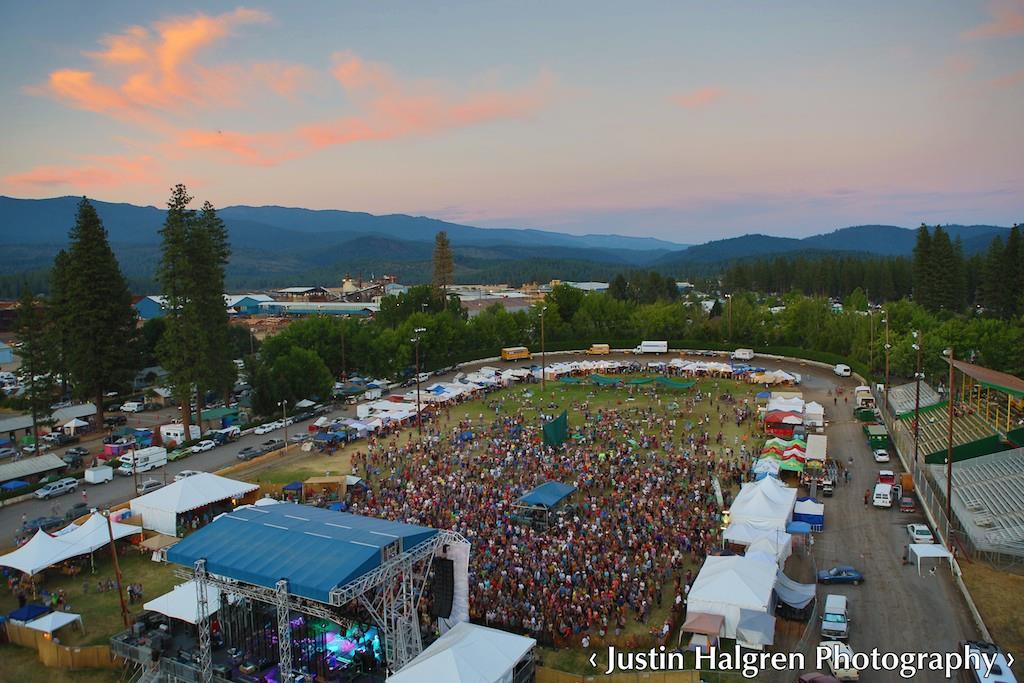
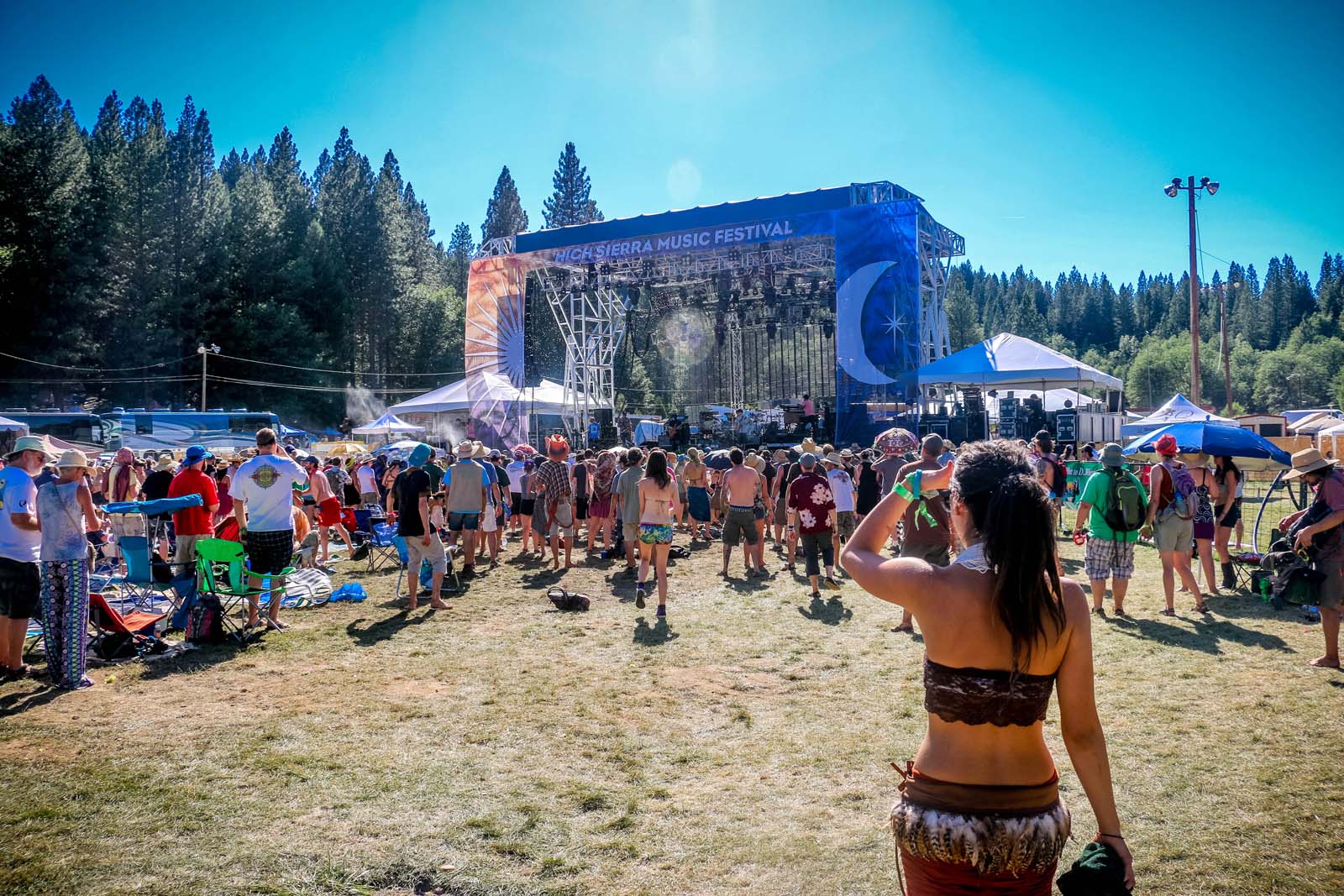
A light warm rain fell from the midnight sky as we dragged our backpacks full of beer and costumes into the fairgrounds. Far ahead we could hear the hard strum of a banjo to our right, but that tune was quickly overcome by a blaring trumpet to our left, followed by screams from a crowd unseen. As our eyes adjusted to the shadows of Redwood groves we could make out hundreds of tents camped around intricate LED lights, people milling around coolers and stoves, or lounging in camp chairs while singing and shotgunning Tecate.
High Sierra Music Festival is celebrated every 4th of July in Quincy, a small Eastern California gold rush town in the Plumas National Forest. It turned out that this 25-year-old celebration of music (in an alpine oasis) was a perfect place to celebrate my 10th festival since it turned out to be a hybrid of all my favorite events.
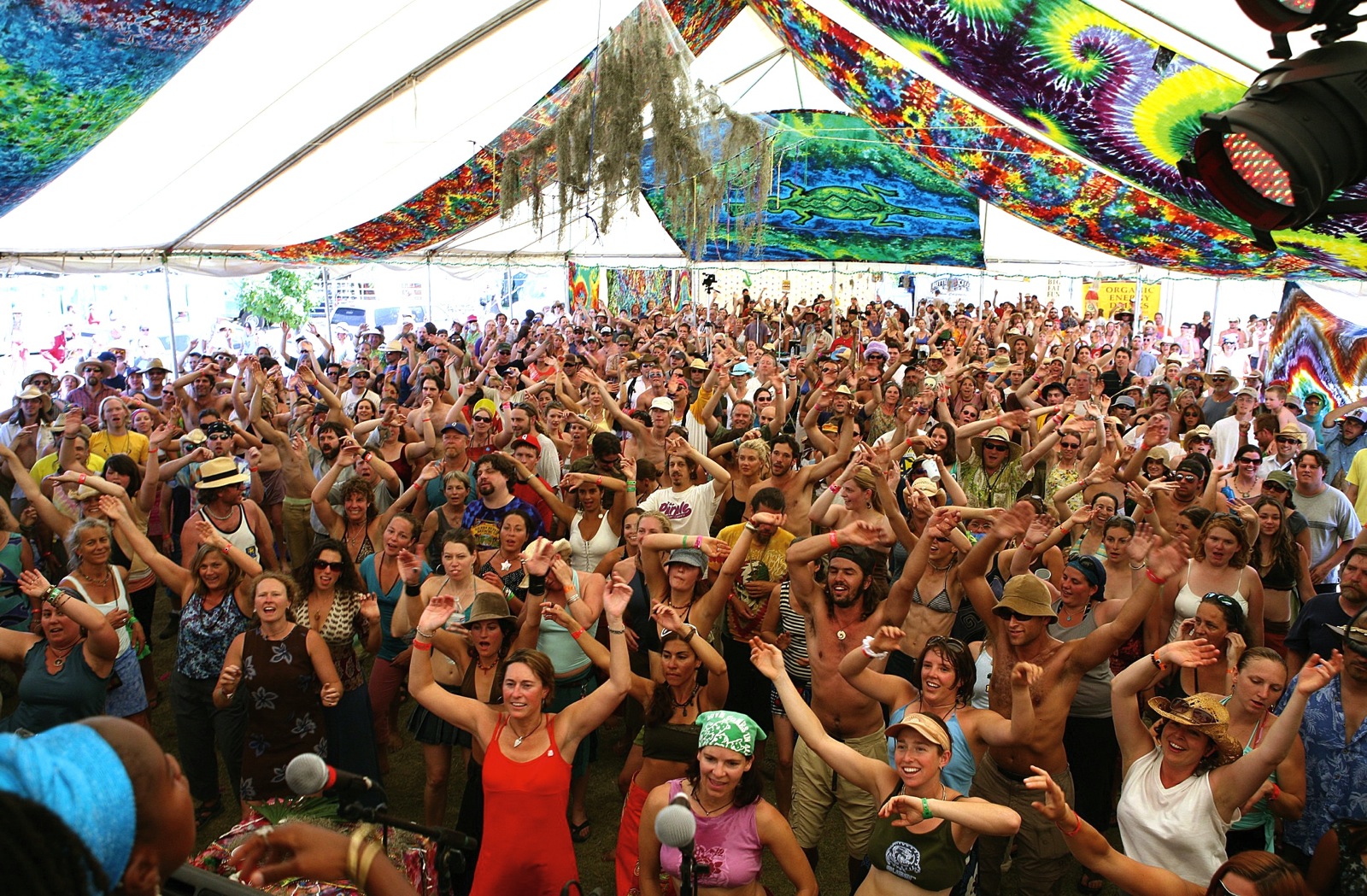
The Burner-esque crowd was welcoming, costume-clad, and not shy about their eccentric rituals (such as Sunrise Kickball)
Five stages continuously showcased phenomenal Hardly Strictly-style music ranging from bluegrass to funk to folk. Talk about a 24/7 groove-spectacular!
The forested location harkened back to the fields of Bonnaroo where I first learned that communing with nature and enjoying live music could be one and the same
The small size reminded me of the surprisingly manageable Treasure Island Music Festival where one could easily lap the venue 10 times to find a dazed and confused friend or catch the end of a show.
All in all High Sierra truly delivered – it was a uniquely beautiful, music-focused festival with a bunch of friendly NorCal neighbors. The strength of the community was palpable – legendary acts were constantly calling up local musicians to the stage for jam sessions. And that sense of camaraderie easily translated to the festival grounds, where it was easy to forget the woes of the world, sit back amongst the trees and just enjoy the F*** out of life.
Read below for a detailed musical highlight reel (Favorite show: Lake Street Dive; Favorite new band: Turkuaz)
Or peruse a playlist of my favorite shows here: High Sierra.
Thursday Night
The weekend began with a energizing 1am set by the funky and jazzy “Karl Denson’s Tiny Universe”. Karl Denson plays saxophone for The Rolling Stones and Slightly Stoopid, but his own band really knows how to stir up a crowd. Their booty smackin’ track “Shake it Out” helped me forget my 6 hour drive and start groovin’ as in a hurry! This was the best kickoff for what would proved to be an epic weekend.
Friday
Friday morning brought the stifling sierra sunshine that afforded us gorgeous views shrouded by the night before. Unfortunately sunshine also meant a stifling 98 degree, luckily the Feather River was right down the road. After a quick morning yoga session on the lawn 12 of us jumped into a van bound of the cool river waters. A few bumpy corkscrew (wrong) turns we made it down a dirt road and landed us on the shores of an amazing liquid oasis. From the beach ecstatic festival goers paddled into the river on banana-shaped rafts, jumped off a 20-foot rope swing, and basked in the sun like drunk lizards. This nature recharge was absolute euphoria and the perfect predecessor to my first full day of music.
First up was a set in the (beautifully shaded) Music Hall by local band The Brother’s Comatose. After listening to this band for a few years now and I continue to be impressed by this ensemble’s remarkable knowledge base of folk, rock, and traditional bluegrass styles. Despite their name this band is anything but sleep-inducing, rather their music riles up a crowd and inspires those dancing feet. Have a listen to their anthemic singalong “Church Street Blues” or a taste of their beautiful ballads with “Morning Time”.
On the main Grandstand stage was a newer favorite of mine, Shovels and Rope, an adorable indie folk married duo from Charleston, South Carolina. Their haunting harmonies and enticing musical spirit have won them two Americana Music Awards, and in the Spring they are expecting their first child together. During the set Cary Ann remarked about the sad violence that has recently occurred in their hometown. In a beautiful homage to the future they dedicated their last song “Birmingham” to a more loving and equal South for everyone.
After an afternoon of folky goodness the sun set and it was time to turn up the FUNK. Luckily, Turkuaz was just the nine-piece “powerfunk” band to make it happen. Hailing from Brooklyn NY their modern twist on the classic funk sound was captivating and revolutionary to my ears. The whole set all I could think was “Why the hell don’t I listen to more FUNK?!” (Fo’ REAL). . Listen to “Bubba Slide” for a taste of this groovin’ sound that combines world-pop-dance grooves, Beatles folk rhythms, and Motown.
The night ended with an brassy early morning (1-3:30am) set by The California Honeydrops. Drawing on diverse musical influences from Bay Area R&B, funk, Southern soul and Delta Blues, this band brings vibrant energy and infectious dance-party vibes to their live shows. I was particularly tickled pink by their song “Pumpkin Pie” which features a prominent character who is possessive of pumpkin pie (an obsession I can relate to). At the end of their swingin’ set they brought on stage 7 more musicians from the Element Brass Band to belt out some rockin’ covers along with their guitarist, dummer, washboard player, percussion, basist, and keyboardist. The sound was great but I was even more impressed the stage didn’t collapse!
For the past six years this Portland-based string-infused quartet has racked up miles playing sold-out shows in their adopted hometown and garnering new fans across the country for their old-timey sound. Their latest release, Just One of Them Nights, showcases Fruition’s folk rock sound while the lyrics detail the countless struggles and successes that come along with a vagabond lifestyle. Listen to “Mountain Annie” to get a taste.
Possibly one of the most hilarious concerts I’ve ever attended, Steve Poltz is part musician and part stand-up comedian. The title track of his new album “Freebasing Celery” explains a lot about this jokester with extreme musical prowess. Steve Poltz is a talented and prolific songwriter, as well as a smart-mouth, highly entertaining storyteller who winds his audience into a tizzy of laughter. His work has toped the Billboard 100 and is an impressive collection of ballads, rockers, and melodic acoustic numbers. Check out his hilarious and heartfelt song “All My Friends” performed at Folk Alliance 2014:
LSD took the cake as my favorite show at High Sierra. Sultry sexy front woman Rachael Price was the most captivating songstress I’ve seen in a long while. Her dynamic vocals were supported by a bodacious band featuring a trumpet/guitar player, bassist, and drummer. The group met in 2004 at the New England Conservatory in Boston and have been breaking through people’s conceptions of folk and soulful rock ballads ever since. The band recently shot up to stardom when they received rave reviews from the The New Yorker and Rolling Stones for a show at NYC City Hall. Check out their hit “Bad Self Portrait” performed live set at Pickathon:
Chirs and Oliver Wood shared a childhood steeped in American roots music and in 2005 they started sharing their unique twist on Americana and blues together on stage. At High Sierra they owned the Grandstand stage and played a well received encore. Characterized by dialed-in vocal harmonies Oliver’s gritty acoustic guitar, Chris’s virtuosic upright bass, the duo has released six albums and earned praise from NPR and The New York Ttimes. Check out their best known tune, The Luckiest Man, below.
Sisters Leah Song and Chloe Smith tear into sound with a sensual prowess. At High Sierra they had the Big Meadow tent crowd enraptured with songs protesting the broken criminal justice system and racial tensions. Their beautiful banjo and fiddle duets pair wonderfully with poetic harmonies like only sisters can do. Their activist anthems are only one of many styles of music they play – including jazz and folk and New Orleans Soul. I have no doubt this women are on the fast track to stardom as their style redefines folk music as a truly living art. Enjoy their down home original “The Dirty South“:.
Sunday
The festival ended with a night of wandering around the festival grounds, meeting old timers who had dubbed their 15 year-old camp “Porch Time” and gladly served you a whiskey cocktail from their homemade bar (felled from a 130-year-old Sugar Pine). With daybreak brought the masses out for “Sunrise Kickball” a calamitous group of festival goers running baselines in Eeyore onesies, dancing to James Brown Remixes, and creating larger than life bubbles thanks to the Bubble Cart.
Before heading out we caught the last set of The Sam Chase a rough and tumble bluegrass rocker whose hoarse voice and aggressive guitar plucking adequately matched my all-nighter induced exhaustion. Based in San Francisco, Sam and his band (called The Untraditional) take to stages all over the country with a virulent and frenetic passion. In 2013 they were voted best band by SF Weekly! Their set ended with two extended and exuberant encore songs, including the aptly named “Glory“, which provided me with the last opportunity to boogie and shake for the weekend.
I left the Vaudeville tent happily exhausted, smiling wide with tinges of the previous night’s face paint and costumes strapped precariously to my backpack. Soon I was packed up and loading the car for a long ride home. Before leaving I took one last gaze at the surrounding Sierra foothills and felt a sudden surge of happiness and gratitude. The weekend had brought with it a new group of fantatsic friends, numerous new bands to listen to and love, but most all I felt a kinship with the Sierra mountains that I didn’t know had been missing. High Sierra officially had me hooked and 4th of July would never be the same.
“If you were to pair this beer with a song what would it be?”
At the Boonville Beer Festival I recently asked for a musical pairing with each beer sample I received. Set against the beautiful Anderson Valley, Booneville beer festival brings together the best of Northern California’s population – hippies and hicks. But when the beer is flowing politics are left behind and the surrounding campgrounds are filled with strangers playing cornhole, jovial campfire stories, and even a few stray bottles of moonshine.
While immersed in this culture-clashing event it seemed quite perfect to get to know this community even better through my favorite form of currency – drunk music recommendations. The link between music and alcohol is as old as civilization itself; serving as therapeutic escapes from the hardest of times. Both of these sensory treats complement each other as they transport one from an imperfect reality to more harmonious state of mind colored by a symphony of sound that also tantalizes the taste buds.
So to cast a true “Cheers!” to this oft overlooked merriment pairing I conducted a rigorous survey of beer and music duos. This expert knowledge was gathered straight from the hop-swiggin’ hooligans themselves, a myriad of west coast breweries presenting at Boonville Beer Festival. The answers to my survey were surprising, enchanting, and even educational (see: LEGO Movie theme song). I went into this melodic journey expecting a bunch of bluegrass and jam bands, but was happy to find music tastes as diverse as the beers being presented.
Music to Your Beers: Booneville Edition (Link to Spotify Playlist)
How a Saison relates to ABBA is still a mystery to me, but the beautiful Aussie pouring could have told me the pairing was “Spice World” and I would have smiled in agreement.
The brewers sang me this song choice with the lyric “What a looooong strange trip it has been!”, which helped explain their euphoria from premiering this new and notable hoppy ale last month.
North coast’s delicious dark belgian ale is paired expertly with up beat saxophone and the soulful, sultry baseline of this Jazz classic. Throw on a smoking jacket and you’ve got yourself an evening.
Enter the surprise 90’s slow jam admission: the brewer at Coronado was so quick with his pairing response that I’ve got to believe he’s throwin’ back this jam while crying into his strong ale. We got you dude, hang in there.
Described as “a bold brew that is a super nova of hop bitterness & aroma” I’d agree that this 9% Pale Ale could easily be compared to the 1960’s hit “Wild Thing” which recounts the singer’s unabashed passion and lust for a formidable temptress.
This ferocious black IPA deserves the bold, head-banging sound of Metallica, so it’s no wonder that my tasting buddy yelled “Rock on!” as we sipped it down.
While tasting this fruity (and perhaps antioxidant filled) wheat beer I was serenaded by the euphoric tune: “Everything is Awesome!!” by Tegan and Sarah, & Lonely Island. After not recognizing the song on the brewer’s first attempt he was joined by two charlatans in the tasting line to reprise the chorus in unison with big grins. When I still looked on with a blank stare and confessed to not recognizing the song they yelled: “IT’S FROM THE LEGO MOVIE! C’mon!”. Their cumulative insistence of this fact revealed that all reasonable people should know this and I had been living under a rock. Consider the knowledge bomb dropped.
Siamese Twin is a sweet and malty Dubble ale that mirrors this lovely piano rock ballad by The Hush Sound, a quartet with Ben Folds Five-esque melodies that recently reunited for the first time in 5 years.
Since the festival was themed “super hero” my costume was Cosmic Girl and as such this song paired beautifully with the host brewery’s delicious amber ale. Later that night we sipped this Anderson Valley classic while dancing around the grain room during our own private brewery tour.
Golden Road has stood out amongst a large field of breweries in California (not a small feat) and so it seems fitting to pair this phenomenal brewery with a similarly infamous jam band.
As the sun dipped low in the sky, the brewers got a bit more sentimental with their song choices. This pairing denotes the folksy community of tipsy new friends that (at this point in the day) were more than happy to share a 2nd, 3rd, or 4th pour together.
This song was explained to me in a desperate voice, the voice of a man who has poured “180 tasting cups” and is ready to join the festivities himself. So with my sip of Mendocino Brewing’s well balanced session ale I helped the brewer tap his keg and brought him one step closer to an alcohol-infused salvation. Huzzah!
Happy Passover, Easter, and March Madness dear readers!
For the local music nerds out there Spring brings a special gift of musical delight…This local holiday is Fauxchella.
Fauxchella is a time of year when the Bay Area music scene gets a bountiful boost of high quality shows from bands who are traveling up I-5 from Coachella Music Festival. So for those of us aching for an early taste of the 2015 festival scene – without risk of heat stroke or offensive SoCal fashion trends – Fauxchella is like Christmas (in April). The line-up this year is quite impressive. (photo credit: SFStation.com)
While many shows are already sold out, last minute tix always pop-up on craigslist or stubhub, so keep your eye out! I have 3 shows in my queue, see full details from my February post:
April 7th: The Preatures @ The Indie
April 16th: Alt-J & Jungle @ The Greek
April 21st: Slyvan Esso @ The Fillmore
In other news…Concert Recaps plus New & Noteworthy songs
Quick Concert Recap:
Ibeyi @ The Independent
How do I describe the magical journey that this concert beheld? Words won’t do it justice. These French twin sisters, Lisa-Kaindé and Naomi Diaz, knocked it out of the park! Best show of 2015 so far. Hands down. Their Afro-cuban beats had the brightly colored and ornate audience swinging their hips to dance tracks like Ghost and mindful acapella tunes like Oya. Captivated by the beauty of these young musicians we were all love drunk in their presence. Their unique sound is spreading across the country, as showcased by a recent NPR feature on World Cafe. (photo credit: thewildmag.com)
Jessica Lea Mayfield & Seth Avett @ Palace of Fine Arts
Recently Jessica Lea Mayfiled and Seth Avett (Avett Brothers), came together to record a tribute album to the late, great Elliot Smith. Sing Elliot Smith honors the seminal work of this influential singer-songwriter in a beautiful reflection by these two notable rock musicians. As avid lovers of Smith’s discography, Mayfield and Avett approached the collaboration with three years of work, infusing 12 of Smith’s melancholic tunes with a fresh flavor that reflects their personal genres – sparse and poignant alt rock vocals for Mayfield and southern upbeat twang for Avett. During the show the artists intermixed their Smith covers with some of his major influences – covering artists ranging from The Beatles to Bob Dylan. A few Mayfield originals were also played, including my favorite of the set – “Our Hearts are Wrong” a wise worded folk ballad with sweet and raw vocals that harken to a smoother Courtney Barnett-esque sound. Overall it was a beautiful show celebrating the life work of Elliot Smith and the artists he has inspired. (photo credit: juno.co.uk)
New & Noteworthy
Leon Bridges – “Coming Home”
Hot off an impressive set of shows at South By Southwest (even award winning), Leon Bridges is dazzling audiences with silky smooth vocals and an amazingly fresh Southern roots sound that is infused with a soulful spice that beguiles his youth. Just when you think a genre has reached it’s capacity you get hear an artist like Leon who makes you see the sunshine with a whole new vigor.
Griz – “Stop Trippin (iDA Hawk)”
With a soulful interlude into electronica this tune has got me flippin’ my hair all day everday. This song highlights a common theme amongst the remix genre of late, integrating funk and soul riffs into drum machine beats to create an intoxicating sound that keeps us listening on repeat.
2 Heads – “Coleman Hell”
Looking for a bit more bluegrass in your dancehall beat? Done. This Toronto-based produced seamlessly interlaces banjo in this catchy tune. His music is self described as “Electronic Folk”…think Blue Ridge Mountains meets Brooklyn. (And proceed to have your mind blown…)
Lady Lamb – “Billion Eyes”
In 2015 the resurgence of “lady rock” or female-fronted punk and rock bands is all the rage. As a music-loving feminist I’m extremely excited about this music trend… Get those kick ass women up on stage! Lady Lamb, or Aly Spaltro, is an up and coming singer songwriter who rocks this genre. This Mainer is coming to SF at the end of the month, so look forward to more details soon!
Broken Back – “Halcyon Birds”
Sometimes you just need a new tune to blast in the car when you’re driving with the windows down through beautiful wine country or along coastal highways. Will you feel like you’ve been ironically cast in a Levi’s commercial? Perhaps. But sometimes the sunshine feels a bit warmer with the right soundtrack…
Two hours on a plane, one hour on a train, and six flights up a winding staircase landed me at the door of Alexis’s Parisian flat; where two glasses of Champagne were happily waiting. I dropped my bags in the cozy lamp-lit living room and took in the bohemian décor (or “bobo” to the French) teak furniture and bookshelves of French literature. We joyously shared a celebratory drink, “Sante!”. I sipped it down quickly – happy to blur my exhaustion and forget the aggressive altercations I’d had with Air France employees that day. Speed was also of the essence because the Warpaint show started in 45 minutes.
It was a quick walk down Boulevard de Clichy to the venue, La Trianon. The red light district of Pigalle is visible from afar by the bright lights of the Moulin Rouge, and nestled among an array of sex shops and crepe stands. But soon enough those sights and sounds gave way to the true neighborhood ambiance – one filled with French cafes, whose full tables spilled onto the sidewalk, murals adorned every alleyway, and chic Parisians (à la mode, évidemment) promenaded down the boulevard. Once we arrived at, La Trianon, I was immediately impressed. The venue was beautiful, concert goers were led up two white marble staircases to the main lobby which was adorned with chandeliers & red velvet curtains. In the face of the music hall’s captivating opulence, the band’s “merch” table seemed almost comically underdressed. Inside the venue we filled in the main concert floor where opulent golden balconies hung above us.
Despite the ironic nature of seeing an LA band while abroad in Paris, Warpaint perfectly matched the city’s artsy culture and minimalist fashion. With a sparse rock sound that often pairs with avant-garde vocals, it was obvious that they were very much at home in Paris. After an initial language barrier snafu the audience was quickly won over by the band’s alt rock,female-powered vibe. Within 3 hours of my arrival in Paris I was swaying alongside 200 new friends as lead singer, Emily Kokal, crooned Warpaint’s 2015 title track, the heart-thumping “No Way Out (Redux)”. With haunting bass lines this song is reminiscent of “The XX”, but Warpaint takes this genre up a notch by adding an electric shot of adrenaline and three more kick-ass females on stage.
Their set continued with a few songs from Warpaint’s 2010 album, The Fool. Despite the band’s rise to international fame over the past few years this album continues to be their best loved and most famous. A notable song they played was, “Undertow”, eliciting many excited hoots and hollers from the crowd.
Throughout the show Warpaint’s bandmates were illuminated by an oscillating purple and green light show. These women were lit up as true rock stars – delighting us with drawn out lo-fi guitar riffs and even a few notable drums solos. The distorted guitar and vocals on “Go In” harkened back to the band’s beach-bound roots; a reminder of summer warmth that the Parisians in the audience were more than happy to dream of as they clutched winter hats and gloves in the concert hall.
Warpaint’s show was also notable for it’s varied range of song styles. From hard rocking anthems to folk-tinged ballads the band brought the audience through a range of emotions and experience. In the song “Billie Holiday” Warpaint exuded this deep reservoir of soulful resonance that reverberated throughout La Trianon. Since this is my favorite Warpaint song I had high hopes for the performance, and their superior execution of the ballad made me squeal with pure delight. When a band like Warpaint is able to demonstrate such varied musical dexterity it bodes well for their musical future, denoting new possible avenues of complexity that will help keep their sound relevant for many years to come.
Warpaint’s concert was a delightful introduction to Paris: a true European culture center where the residents live and breathe art everyday. In a community where one attends an art opening (“vernissage”) as commonly as Americans attend a house party, it was refreshing to bask in the creative glory of it all. The show at La Trianon was also a helpful reminder that we are all active participants in the art industry and lovers of culture. And in the spirit of the recent Spring Equinox celebration, I was able to reflect upon the fact that every few months we all begin a new phase of life. Thus we are granted the opportunity to mindfully integrate more artistic expression in our lives and in this way adopt the Parisian philosophy of welcoming “Art as Life”.
Why do you love Beirut? The question was being posed to me at a house party, one where the host’s superior collection of craft beer had turned me into a blushing and slightly over exuberant conversationalist with all the new cute strangers I met. This new cute stranger demonstrated enough basic hipster fashion trends (Warby Parkers and Japanese Denim) that I knew he’d heard of the indie band Beirut, but for whatever reason, had not come to worship them like I did. By answering his question “Why do you love Beirut?” I would have to craft my argument in an eloquent and fun fact-based manner, maybe even provide this information with a few coy half smiles, to reveal that I too had more secrets to reveal.
Alas, my drunken reasoning that night didn’t amount to any romance with said hipster disbeliever, but I did wake up the next morning perplexed that I had recounted this conversation so many times. Why did it seem like so many well meaning music fans, even well read music fans, had not been bitten by the Beirut bug? How do you explain to a stranger how a band can follow you through different states and countries, falling in and out of love, and still magically feel relevant in 2015? Did the band’s dramatic pairings of Balkan brass melodies, mixed with ukulele solos, guided by soaring vocals not captivate their wanderlust ambitions?
Perhaps not, but Beirut has been my musical companion for almost a decade and I believe a North American tour is in the band’s near future. After they premiered two new songs in 2014 “Rumeli” and “No No No” at Brooklyn’s Northside Festival, I’m hoping there will be 2015 tour announced soon (and maybe even a few new fans will join me on the dance floor). So lets see if I can take you on a journey of exploration and appreciation of Beirut that befits this glorious global fusion band whose eclectic sound is both intoxicating and cathartic.
I was immediately drawn to Beirut when I first heard them in college. After spending many years obsessed with Wes Anderson, I was already captivated by any artistic opportunity to escape the drudgery of real life for stories of a more beautiful and poignant world. Beirut’s cinematic grandeur of multi-instrument melodies paralleled the movies I had come to love for illustrating basic human experiences of love and loss in a fresh and more contemplative way. There was a maturity and curiosity to Beirut’s music that amplified those common themes I was currently struggling with in college. Living out of state was my first real taste of independence and Beirut’s music beautifully showcased that sense of adventure mixed with self reflection and doubt that I grappled with on a daily basis. The European and Latin American flare of Beirut’s music added a color of romance to the challenges and victories of early college life, thus helping me stay hopeful that adulthood would soon turn into a beautiful and poignant experience.
The first Beirut song I fell head over heals for was The Penalty. This beautiful ballad was introduced to me by a friend who played the Ukelele-based tune by campfire one cold and starry night. Before you sigh and make a snarky comment about Moonrise Kingdom, I would like to remind you that this was 2008, so chill the f*** out.
The Penalty is a great Beirut primer because the listener is introduced to lead singer Zach Condon’s soaring and penetrating vocals with minimal instrumental distraction. His lyrics are lightly complemented by a Ukulele melody (that is surprisingly un-Hawaiian) and finishes with the support of an accordion and drums. Ukelele is a cornerstone of Beirut’s sound due a childhood injury that rendered Condon unable to play the guitar. The Penalty provided me with solace in college, a refreshing sonic source of simplicity in the ever more complicated adult world. It is a great song for gentle reflection or dozing off after a few too many IPAs.
After getting hooked by “The Penalty” I dove in my typical intensive research mode and learned about the fascinating history of Beirut the band. It began as the brainchild of New Mexico native Zach Condon. He created 5 solo bedroom recordings after dropping out of high school; these recordings eventually turned in Beirut’s first EP, Gulag Orkestra in 2006, with the help of Jeremy Barnes from Neutral Milk Hotel. To illustrate the band’s early Balkan sound listen to “Postcards from Italy” which I love for it’s hauntingly beautiful sound that showcases Condon’s talented ability to play trumpet, euphonium, mandolin, accordion, various keyboard instruments, as well as ukulele (did I mention he is also adorable? SWOON). This song is a perfect example of Condon’s efforts to pair old world European instruments with melancholy lovesick lyrics that were instantly relatable. From the same EP the song “Scenic World” denotes Condon’s interest in electronic mixing, and his ability to play with this art form while still holding on to his gift for lyrical story telling with cinematic ambiance. This EP was a fantastical beginning for a band that would soon sweep us away in dreams of adventures abroad.
After the initial EP Beirut matured from Condon’s bedroom side project to a full fledged 8 piece band in 2007. The band’s maturity and cohesiveness is showcased in the song “Elephant Gun”. The combination of electronic drum machines mixed with European brass instruments is tantalizing and intoxicating. As an aging adolescent it was comically easy for me to relate to 20 year old Condon as he croons “If I was young, I’d leave this town, I’d bury my dreams underground…”. Only now as I reflect years later do I see how ridiculous this would sound to the well sensed music critics who baffled at Condon’s Hemingway-tinged romanticism and cynicism at the time. But luckily Beirut ignored the press and carried on to release the band’s first full length album,The Flying Cup Club, later that same year.
By the 2007 release of Beirut’s album “The Flying Cup Club” the band had moved from fringe indie band with global influences to a major music attraction that was touring the country. It turns out I wasn’t the only college student discovering their sound by campfires and dreaming of Wes Anderson themed backdrops.
The Flying Cup Club begins with a disorienting 20 second intro of fog horns, but quickly gives way to “Nantes” a beautifully uplifting melody befit the procession of a king. This album format enriches the cinematic theme that helped me fall for Beirut in the first place, if Wes Anderson were to ever film a romance tale in France I’m guessing he’d chose some of these melodies for the soundtrack. “Sunday Smile” would start a scene of sweeping views of the French countryside while “Fork and Knvies (La Fete)” would accompany a lake boat ride scene in which the protagonist confesses his love to Feolinia, his third cousin visiting from Prague. French Wes Anderson movies aside, this album is still my favorite of all Beirut’s history, and a milestone in the band’s history of legitimizing their unique sound to the world.
Not to be outdone, two years later in 2009 Beirut dropped another EP “March of the Zapotec” which further baffled critics because it highlighted traditional Mexican music and completely ignored Europe all together. It was as if the band had become bored with their major in “European History” and instead opted to study “Latin American Studies” just for the thrill of it. This EP includes a full piece traditional mariachi band and a seemingly Franco-phile departure from their previous sound. Condon’s obsession with brass instruments can be seen in the “The Akara” and I often wondered if this departure from European music was simply another “F*** You” to the music community that had only just recently learned how to classify Beirut’s eclectic sound. Foot stomping aside I think that March of the Zapotec was a demonstration of the band’s reverence for different music cultures in the Americas, but it left fans like myself feeling a bit confused none the less. I longed for Beirut’s old sound, but knew that their unpredictability couldn’t guarantee I would hear that again.
In 2011 I had the delight of seeing Beirut perform many of their early hits live for the first time in a cramped music hall in Washington DC. Since their last album I had graduated college, moved back East, and was begrudgingly trying to accept adulthood realities that were less imaginative and “world changing” than my liberal arts dreams had hoped. In many ways Beirut’s release of their 2011 newest album, The Rip Tide, was exactly the musical remedy I needed. A soundtrack to stoke my sense of adventure and romance, a melody to crystalize my hope for a less corporate future. The album was published on Condon’s new record label, Pompeii Records, an independent label that demonstrated Beirut’s hope to create uncharacteristic music in an uncharacteristic way. Lucky for me, this album was unlike their Mexican EP and instead a more mature version of their early brassy, lavish sound that had captivated me all along.
The first time I heard the title track of The Rip Tide, “A Candle’s Fire”, I felt a rush of excitement and anticipation. Like a visit from an old friend, this song harkened back to Beirut’s classic orchestral melodies, but felt a bit newer and cleaner, like the trumpets had gotten polished and ukelele had gotten restrung. The album continued with the familiar dramatic emotional range of songs, but with an unfamiliar regional focus – this time on the US. For once Condon was paying homage to his homeland instead of some romantic locale abroad, as if adulthood had taught him to appreciate his roots a bit more.
Only four months after that show I left DC to set down some new roots, while using The Rip Tide as my steadfast musical compass. I hummed along to “Vagabond” as I rode the train through Boston and dreamt of my impending adventures on the coast. One cold and starry night in Maine I listened to “Goshen” on repeat for two hours as cried my heart out – finding solace in piecing together the lyrical parallels with my own life, easing my heartbreak with the song’s poetic reverence. By the end of the year I was headed back to my homeland on the west coast, and Condon’s soliloquy to his hometown “Santa Fe”, felt quite fitting to reflect upon during the plane ride.
In 2013 I saw Beirut perform at the Fox Theater in Oakland. I gathered up my closest friends around me in the audience as I sang along loudly, teared up often, and soaked up all the musical grandeur like a sponge. It was a transcendental experience to be sure. Beirut’s musical mastery is something that can’t be easily described, not even by a super fan like myself who feels such a deep and visceral connection to the band’s music. But even if you haven’t fumbled into adulthood alongside Zach Condon and his band of miscreants I’d think it’s worth giving Beirut a listen. Its’ not often that a band with Southwest roots integrates such diverse and foreign sounds from Europe, Mexico, and even Hawaiian instruments to create such a powerfully beautiful musical experience. It’s a unique sound that speaks to the adventure seeker and wanderlustful music lover in us all.

 To celebrate this day of magical mystery, and to balk at all the fear mongers out there, I’m delivering to you a celebratory new playlist. As a reverent lover of Friday the 13th (along with my
 As luck would have it, my trip coincided with Austin City Limits, and thus stellar mid-week shows were in abundance. On Monday night I swooned for the crooning indie folk voice of lead singer Ben Schneider, of Lord Huron. On Thursday night I was beat-blasted by the duo of Sylvan Esso. Both of these bands I had seen before, but earlier in their careers and in less intimate venues. It was an amazing treat to see them perform polished sets to wrap up respective summer tours fora crowd of less than 200 people.
 We sipped local IPAs and PBR tallboys and observed local hipster fashion (legit mustache games) and watched the venue fill in preparation for the main act, Lord Huron, to begin. The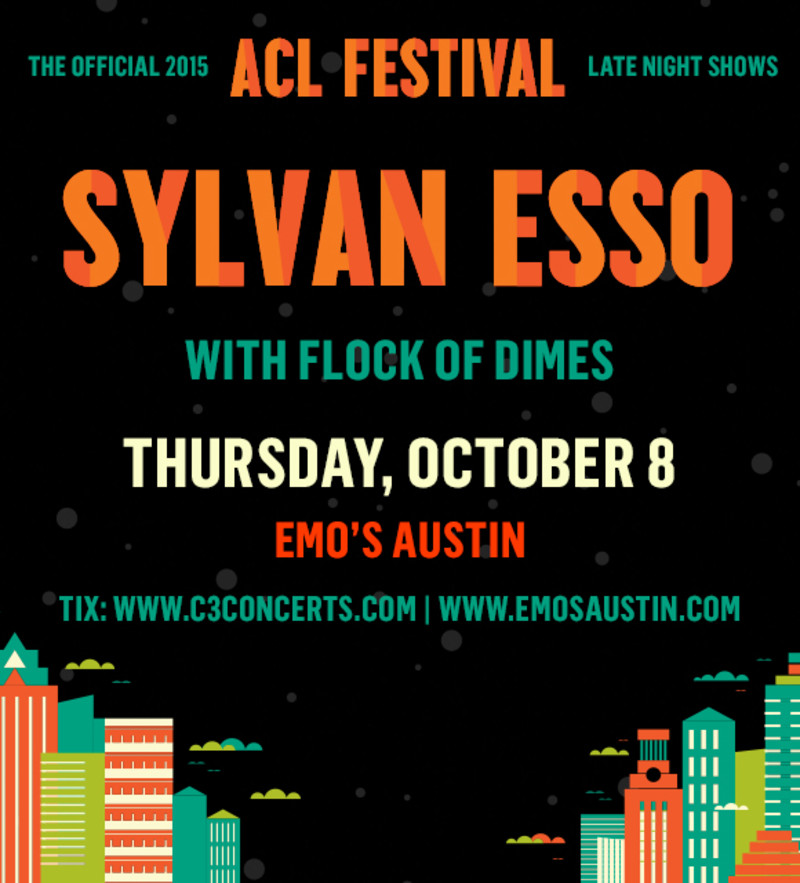
 s, it became evident that the emotional appeal of this show was not just coming from the audience but rather a their relationship between performer and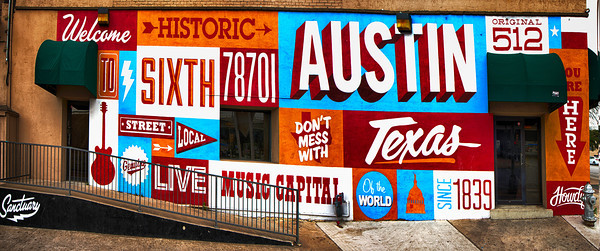




 Happy Passover, Easter, and March Madness dear readers!


 Music On My Mind